
WHY USE PVDF
PVDF PROPERTIES, BENEFITS AND USES
Polyvinylidene fluoride, commonly known as PVDF, is a versatile and high-performance polymer that has found its way into a wide range of industries and applications. From aerospace and automotive to electronics and construction, PVDF offers a unique combination of properties that make it an ideal choice for various purposes.
PVDF, has a set of valuable properties:
· A relatively high melting point
· High mechanical strength even at high temperatures
· Chemical and radiation resistance
· Resistance to hydrolysis and ultraviolet radiation
· Good wear resistance
· Physiological inertness
· Very low thermal conductivity
· Exceptional resistance to ignition
· Mechanically strong and flexible
The β-phase of PVDF has ferroelectric and piezoelectric properties, which is why it is widely used in electronics, acoustics, radio engineering, medicine, pharmaceuticals, production of components for the petrochemical, chemical, metallurgical, food, paper, textile and nuclear industries, as a structural and packaging material, in the manufacture of solar cells and piezoelectric elements.
PVDF is a highly reactive white crystalline thermoplastic fluoropolymer, unlike other fluoropolymers, it has a low density of 1.78 g/cm3. PVDF exists in various conformational states, its macromolecules can be in the state: disordered amorphous and ordered crystalline. Being a semi-crystalline thermoplastic, PVDF exhibits chemical, thermal and mechanical properties in a wide temperature range. Molecular weight of PVDF is above 100,000 g/mol, melting point is of 171–180 °C, the crystallization temperature is of 141–151 °C, and a glass transition temperature is of −40 °C.
It is soluble in Dimethyl Sulfonic acid, dimethylacetamide, dimethylformamide and insoluble in ketones and esters. It has high mechanical strength, wear and weather resistance, resistance to ultraviolet and ionizing radiation, the action of mineral acids, except for fuming sulfuric, alkalis, halogens and hydrocarbons.
PVDF is a versatile and high-performance polymer that offers a wide range of properties and benefits. PVDF is known for its excellent chemical resistance. It can withstand exposure to a wide range of chemicals, acids, and solvents, making it suitable for applications in industries such as chemical processing, oil and gas, and pharmaceuticals. Another significant property of PVDF is its exceptional thermal stability. It can operate in temperatures ranging from -40°C to 150°C without experiencing any significant degradation. This thermal stability makes PVDF an ideal choice for applications that require resistance to high temperatures, such as electrical components, wires, and cables. PVDF also exhibits excellent mechanical properties, including high tensile strength, impact resistance, and dimensional stability. It is a lightweight material that offers exceptional toughness, making it suitable for demanding applications in aerospace, automotive, and construction industries. One of the most notable properties of PVDF is its outstanding UV resistance.
It can withstand prolonged exposure to sunlight without yellowing, cracking, or deteriorating in performance. This UV resistance makes PVDF an excellent choice for outdoor applications that require long-term durability, such as building facades, roofing membranes, and solar panel coatings. Furthermore, PVDF is known for its low surface energy, which results in excellent non-stick and low-friction properties. This makes it an ideal choice for applications that require anti-fouling, anti-stick, or low-friction surfaces, such as coatings for pipes, pumps, and valves. In summary, understanding the properties of PVDF is crucial for harnessing its full potential. Its chemical resistance, thermal stability, mechanical properties, UV resistance, and low surface energy make it a versatile material suitable for a wide range of applications across various industries.
Its ability to withstand harsh weather conditions, UV radiation, and chemical exposure makes it an ideal material for exterior use. In the electrical industry, PVDF is highly regarded for its excellent dielectric properties. It is used in the manufacturing of cables, wires, and insulation components, where its ability to withstand high temperatures and resist chemicals proves to be invaluable. Additionally, PVDF’s low smoke and toxicity emissions during combustion make it a safe choice for electrical applications. PVDF is also extensively utilized in the chemical processing industry. Its resistance to acids, solvents, and corrosive chemicals makes it an ideal material for pipes, fittings, and valves. PVDF’s ability to maintain its properties even in the presence of aggressive substances ensures the longevity and reliability of equipment in chemical plants. Another notable application of PVDF is in the production of membranes for water treatment. Its highly porous structure allows for efficient filtration and separation of contaminants, making it an excellent choice for applications such as desalination, wastewater treatment, and gas separation. Furthermore, PVDF is finding its way into the medical field.
Its biocompatibility, chemical resistance, and ease of sterilization make it suitable for medical devices and equipment, such as catheters, implants, and surgical instruments. The diverse applications of PVDF demonstrate its adaptability across various industries. Its exceptional properties, including thermal stability, chemical resistance, electrical insulation, and mechanical strength, make it a sought-after material for a wide range of purposes. Whether it’s protecting buildings from the elements, ensuring safe and reliable electrical connections, or purifying water, PVDF continues to play a vital role in shaping our modern world.
FORMS OF PVDF
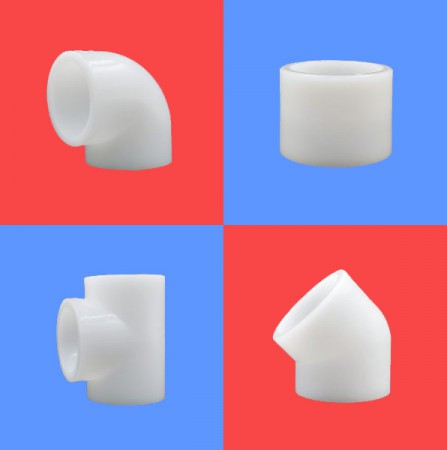
Rigid piping and Fittings
Thin wall Tube
Thin wall tube fittings
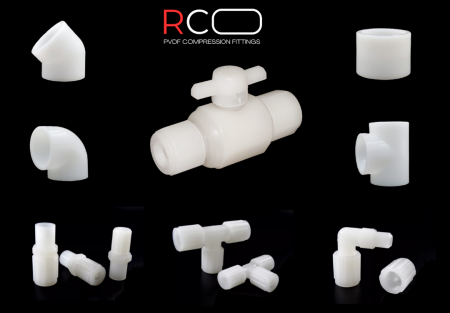
PVDF Valves and special fitings
Compression Fittings
Socket Fusion Valves and Fittings
Butt Weld Valves and Fittings
In conclusion, PVDF is a versatile material that has gained significant recognition and popularity for its outstanding properties and wide range of applications. Its unique combination of chemical resistance, mechanical strength, and thermal stability makes it suitable for various industries, including aerospace, automotive, electronics, and construction. Its low friction coefficient and self-lubricating properties make it well-suited for applications in valves, pumps, and bearings, minimizing wear and extending the lifespan of equipment.



REQUIRE MORE INFORMATION?
Send an e-mail to sales@resistochem.co.za for our full catalogue of PVDF products.